


Our ability to pay attention is limited. Every day, more screens, notifications, and demands compete for it, making it harder to focus.
Instead of adding another screen to your life, we developed a screen-free tool to help you take your attention back.
Designed by a psychologist and only takes about 60 seconds to use.
Watch the brief video to learn more.
Meet the

Focus Frame
Meet the
Focus Frame
Every day, screens, notifications, and competing demands make it harder to focus and find time to relax.
Most of us already know what can help. The challenge is remembering what to do and then actually doing it.
Instead of adding another app to your life, we created Focus Frame—a tool that's about the size of your phone that helps turn what you know into something you actually do.
Psychologist-designed. Screen-free. 60 seconds. That’s it.
Watch the brief video to learn more.
A PRACTICE AND REMINDER IN ONE PLACE
THE FRAME GIVES YOU THE PAUSE. THE CARDS GUIDE WHAT TO DO WITH IT
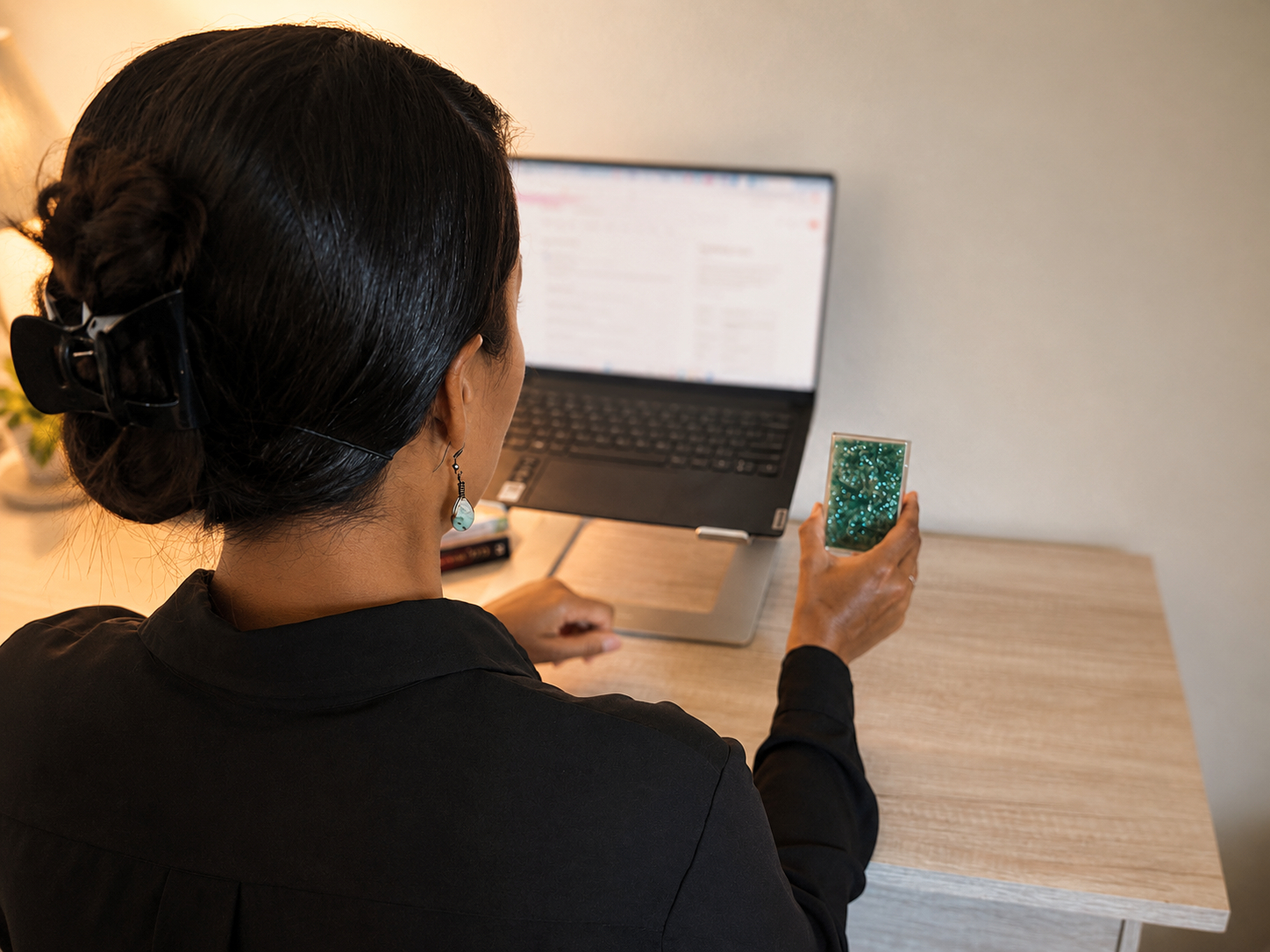
Focus Frame is a glitter-filled acrylic frame, about the size of your phone, with a slot for cards featuring 60-second practices for everyday challenges like stress, overthinking, and difficulty focusing.
Choose a card and place it in the frame where you’ll see it throughout the day. When you need a moment, shake the frame and follow the practice as the glitter settles.
The card stays on display, serving as a reminder of the skill and making it easier to return to whenever you need it. The more often you use it, the easier it becomes to interrupt distraction before reaching for one.

Step 1: Pick a Card
Choose a card that fits the challenge you're facing today, then place the frame somewhere you'll see it throughout the day.

Step 2: Shake the Frame
When you feel distracted, overwhelmed, or simply want to practice, shake the frame until it's filled with swirling glitter.

Step 3: Take a minute
Follow the card prompt as the glitter settles in about a minute.

Say you’re sitting at your desk working and you start overthinking. In the frame is the Overthinking card. Just seeing it can remind you, “Okay, I’m doing this again. Step off the wheel.” And if you need more than the reminder, you grab the frame, shake it, and do the 60-second exercise to help you shift out of the overthinking.
START HERE

Everything you need to get started
The Focus Frame Intro Set
$25
WHAT’S INCLUDED
- One Focus Frame
- The intro deck (36 cards) that addresses everyday challenges, such as stress, overwhelm, procrastination, and self-doubt.
- A carrying bag
- Access to additional explanations and resources through the online Companion
"This is one of the few wellness products that has been helpful and I’ve actually kept using."- customer
—
02
Designed to work with attention, not against it.
01
Most people already know what would help. The hard part is remembering in the moment and actually following through.

01
Reminds
The best reminder is the one you actually see. That's why Focus Frame is designed to stay in plain sight.
Every time you notice it, you are strengthening your ability to interrupt autopilot before it takes over.
02

Resets
A minute is enough opportunity for change. Watching the glitter settle creates a simple 60-second pause. Focusing on a single object can interrupt automatic responding and help your nervous system begin to settle.

03
03
Redirects
A lot of us already have the habit of picking something up and looking at it when we feel stressed, uncomfortable, or bored. To create a new habit, it's often easier to build on one you already have.
Focus Frame is designed to mirror the familiar "grab-and-stare" habit people have with their phones. Because the physical action is similar, reaching for the frame can become an easier substitute for reaching for a screen. Over time, it may help interrupt automatic distraction and make it easier to pause and refocus.
A different response
Most people already know what would help. The hard part is remembering in the moment and actually following through.


STARTING EARLIER
Kids are growing up in a distracted world.
Screens are part of growing up today. Kids are getting phones and tablets at younger ages, and many are learning that when they feel bored, stressed, frustrated, or uncomfortable, the next step is to reach for a screen.
Our idea starts with a simple question:
What if kids developed the "grab-and-stare" habit with Focus Frame before they developed it with a screen?
Every time they reached for the frame, they'd be practicing the kinds of life skills we hope they'll use for years to come. They'd be learning skills, such as how to slow down, to better tolerate uncomfortable feelings, and refocus their attention.
Screens aren't going away, and that's not the goal. We simply think that if kids can build this habit early, they're more likely to have another response to draw on before reaching for a screen becomes automatic.


REAL-WORLD USE
Feedback from Professionals
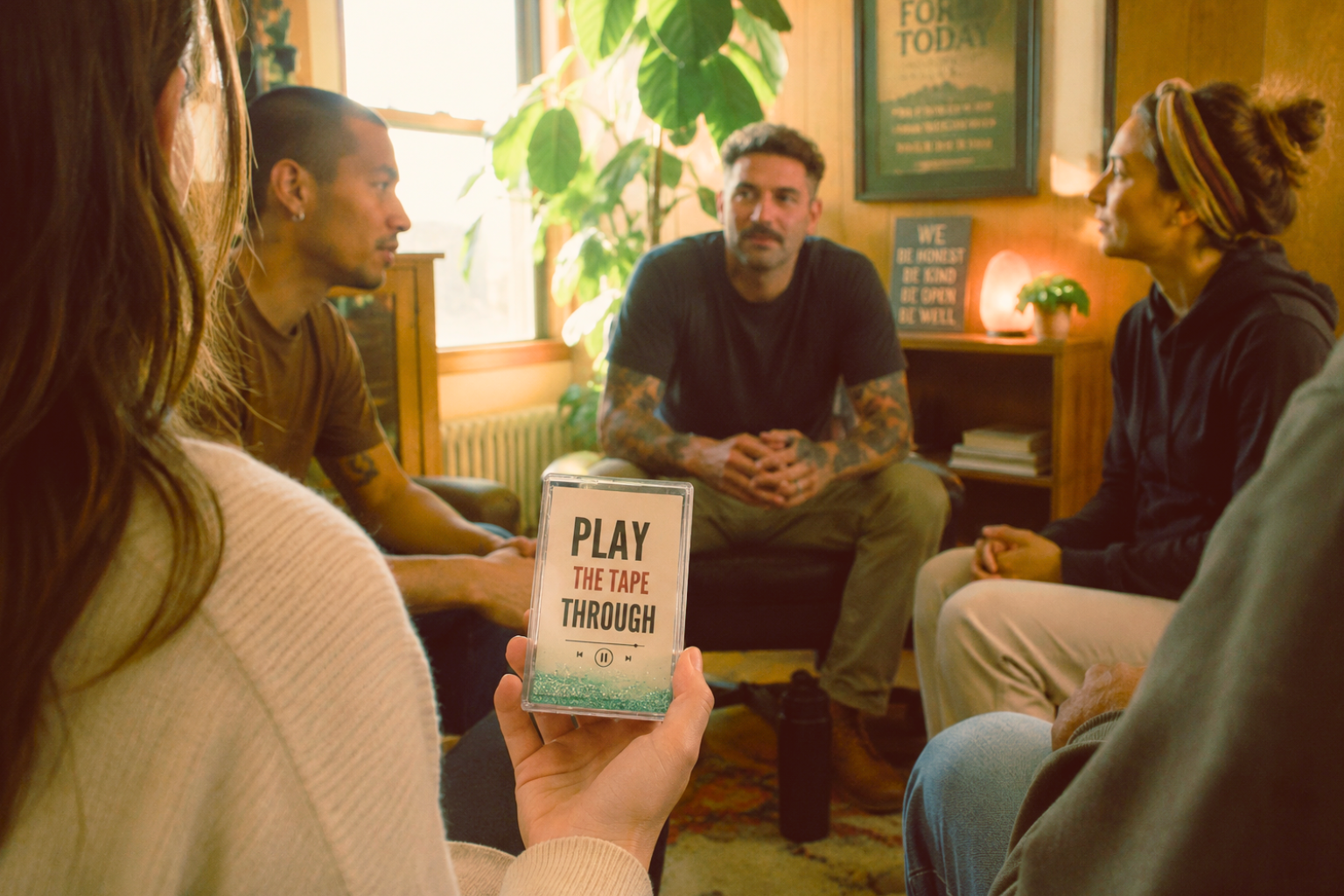
Focus Frame is currently being used in schools, university counseling centers, psychiatric and psychotherapy practices, and on retreats.
Hi Andrew!
I just wanted to pass along some feedback: We have placed a focus frame in our waiting room and in each counseling room. Our clinicians have noticed that some of our students who have come for walk-in/crisis appointments have been bringing the focus frame from the waiting room into the counseling room (not knowing there would be another one in the room). So clearly, it is a hit! I am particularly pleased to know it is our clients in more acute distress that are gravitating toward them.
- Clinical Director of a University








THE FOUNDER
Dr. Andrew Goldberg
Growing up, I had a great childhood...except for when I was in school.
That felt like a prison.
I was not okay sitting still at a desk and being talked at all day.
The phrases I heard most were “sit still” and “be quiet.” Because I couldn’t do either, they were usually followed by, “get out!”
"Between school drop-offs and emails, my mind is usually a chaotic mess. Shaking the frame gives me that physical 'click' to stop and breathe. I feel so much calmer."
Sarah L.
Busy parent
Testimonials
Voices from our community.
"Studying for finals was impossible with my phone next to me. Replacing the 'check-Instagram' impulse with the glitter frame helped me stay focused for hours instead of minutes."
Marcus T.
College student
“The Focus Frame helps my neurodiverse pre-teen and me slow down, regulate our emotions, and connect more effectively. It’s been a huge source of support in today’s fast-paced, overstimulating world.”
Reina Remigo, Ph.D.
Clinical Psychologist


When you need a minute, take a minute.
Protect Your Focus